ROOTED HERE
The history of West Hartford
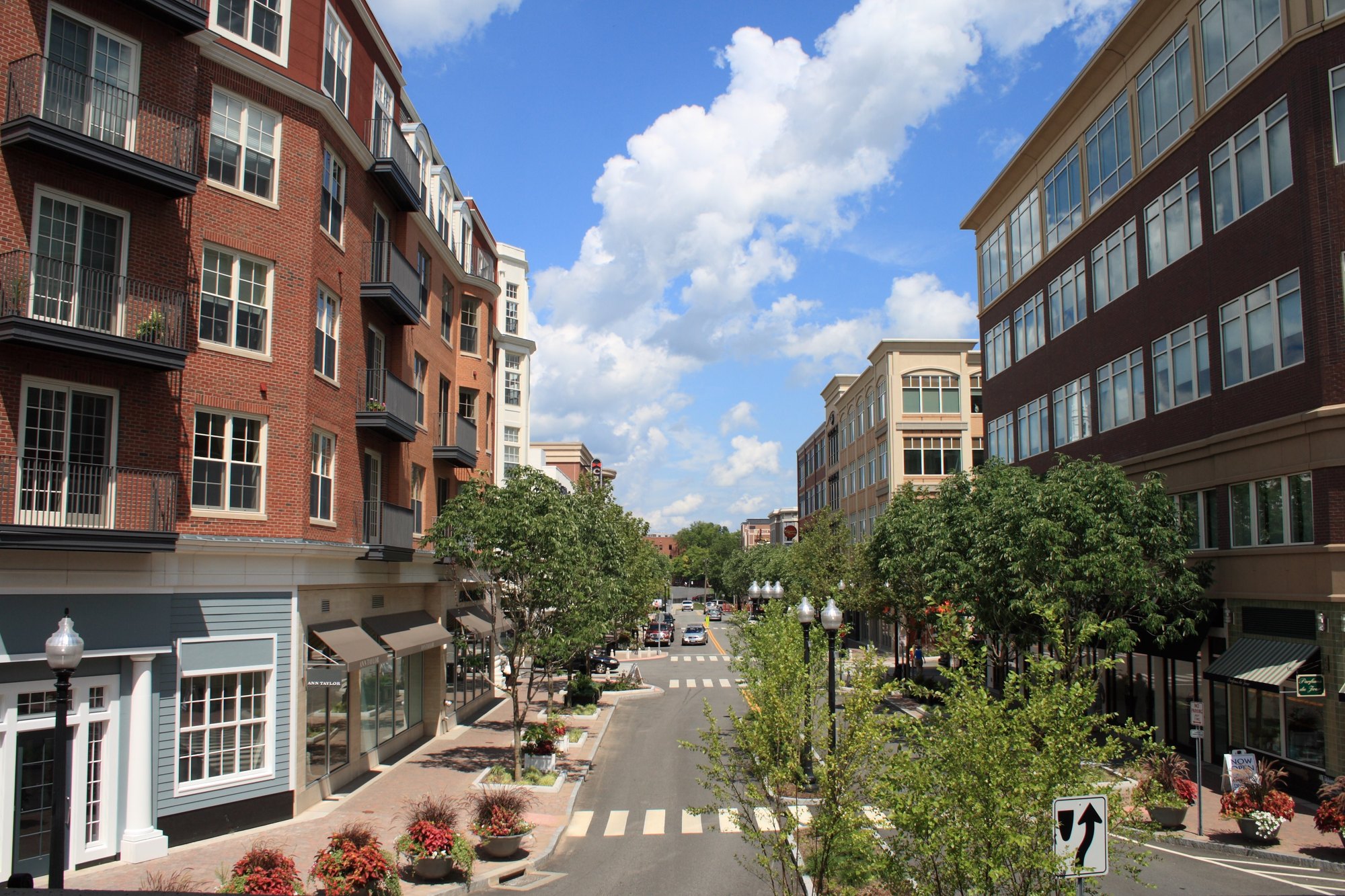
West Hartford Center and Blue Back Square form a concentrated setting for shops and restaurants. Park Road and the town’s public spaces offer other ways to explore, with the Noah Webster House connecting a visit to local history.
People who shaped West Hartford
These milestones are an introduction, not a complete local history. Follow the linked city and museum sources to explore the people and places behind them.Read the local historical account.
Watch the city’s history

FROM THE ARCHIVES
West Hill Drive Historic District | Armchair Tour of West Hartford
The Noah Webster House & West Hartford Historical Society visits the West Hill Drive Historic District as part of its Armchair Tour of West Hartford History series.
Watch on YouTube ↗
FROM THE ARCHIVES
West Hartford Town Hall | Armchair Tour
The Noah Webster House & West Hartford Historical Society visits Town Hall, built in 1924 as the original William H. Hall High School and the town's only high school until 1957.
Watch on YouTube ↗
FROM THE ARCHIVES
A Lost Vanderbilt Mansion in West Hartford
History with Dan Sterner on the Vanderbilt mansion that once stood on Farmington Avenue and the housing development that replaced it.
Watch on YouTube ↗Famous people born in West Hartford
See all 48 famous people


- 1672
The West Division
Hartford’s proprietors ordered a division created to the west, laying out 72 long lots between today’s Quaker Lane and Mountain Road. The area was known as the West Division of Hartford until 1806.
Noah Webster House & West Hartford Historical Society ↗ - Around 1712
The first meeting house
The first Congregational meeting house was built around 1712 at today’s Main Street and Farmington Avenue. As the focus of early religious, political and social life, it gave the area its lasting name: the Center.
Noah Webster House & West Hartford Historical Society ↗ - 1719
The Old Center Cemetery
John Janes deeded land for a burial ground in Hartford's West Division, today's West Hartford. Surviving gravestones preserve the names, family relationships and artistic traditions of the early community.
Town of West Hartford historic-site guide ↗ - 1758
Noah Webster’s birthplace
Noah Webster was born on October 16, 1758, in the West Division of Hartford, now West Hartford. In 1783 he wrote his own textbook, which became known as the Blue-Backed Speller.
Noah Webster House ↗ - 1797–1820
Bishop's Corner becomes a business center
Development of the Talcott Mountain Turnpike in 1797–1798 strengthened this crossroads. Shops and taverns followed; Goodman's tavern also housed the community's first post office in 1820.
Town of West Hartford historic-site guide ↗ - 1854
A separate town
After earlier requests were denied, 153 residents petitioned the General Assembly to separate from Hartford. Lawmakers voted on May 3, 1854, for West Hartford’s independence.
Noah Webster House & West Hartford Historical Society ↗ - 1867
A regional water supply
Reservoir No. 1 opened to supply homes in Hartford and West Hartford. It remains the oldest component of the regional reservoir system.
Town of West Hartford historic-site guide ↗ - 1878
A brick schoolhouse
The Old West School was built as part of a movement toward safer school buildings. The surviving structure at Mountain and Buena Vista Roads later became home to the West Hartford Art League.
Town of West Hartford historic-site guide ↗ - 1896
An early modern subdivision
Development of the Boulevard–Raymond Road neighborhood marked the town's first modern subdivision. Its historic district records part of West Hartford's transition from rural community to residential suburb.
Town of West Hartford historic-site guide ↗ - 1940
Pratt & Whitney
West Hartford’s largest manufacturer, Pratt & Whitney, built a plant on 20 acres in 1940. At the height of World War II it employed more than 7,000 people.
Noah Webster House & West Hartford Historical Society ↗
See the history for yourself.
Check current opening hours and visitor information before you go: Noah Webster House.
For local services and public information, the local government website is a starting point. For historical research, consult local libraries, archives and museums and check collection-specific image permissions.
Selected milestones from the linked historical sources. This is an introduction, not a complete account of the city’s history.